

Javokhir Sindarov's secret weapon - his coach IM Roman Vidonyak
Javokhir Sindarov had an incredible performance at the FIDE Candidates 2026. He won the tournament by a margin of 1.5 points over the field. While a lot of people have contributed towards Javokhir's success - one man takes the lion's share. His name IM Roman Vidonyak and he is the coach of Sindarov. The journey of Roman and Javokhir began in January 2025 and in the last 1 year and 4 months, they have managed to achieve something truly special. What are Roman's methods of training? We tried to understand from the man himself.
It was the first rest day of the FIDE Candidates 2026, Javokhir Sindarov was already on a roll with 3.5/4. He had beaten Praggnanandhaa in round 3 and Fabiano Caruana in round 4. He was leading the tournament with one full point. I messaged Roman Vidonyak (Javokhir's coach) and asked him if he could join us in the livestream on one of the days. Roman replied back, "I would prefer not to give any interviews until the tournament is over. I hope you will understand."

In the words of Roman was a silent feeling of determination and focus. As days passed by Javokhir raked in one win after another. One could see Mukhiddin Madaminov walking with him to the games, but Roman was no where to be seen. It was only after the 13th round when the job was done that Roman came in front of the camera. On the final day, he also joined us for the livestream of the final moments of the game of Vaishali vs Kateryna Lagno. It was a tough moment for the super coach, as his (other) student Bibisara's chances were going down with every accurate move that Vaishali was making.
As Vaishali pushed her pawn to c4, the final nail in her opponent's coffin, Roman shook hands with both Harshit (Raja) and me, wished us congratulations, and with great elegance left the room. Later when the livestream ended, I messaged Roman if we could do a separate interview. I wanted to understand his way of working with Javokhir. "After 12 p.m., any time", was his reply. One thing I have admired in Roman in whatever little interactions I have had with him was his clarity. The man knew what he was talking and had great conviction about everything that he spoke. As the clock turned 2.30 p.m. it was time for the interview.

Super Coach Vidonyak on his relationship with Javokhir Sindarov
Sagar Shah (SS): Roman, thank you so much for doing this interview, and a huge congratulations to you for Javokhir’s victory. It’s been roughly two days now, since he won with a round to spare. How are you feeling overall?
Roman Vidonyak (RV): Wow! It’s a great tournament. It was a great result and a great achievement, but it is in the past. We have a new day and new tasks. For spectators, it’s just a very big moment and a huge tournament from Javokhir. For us, I think, two or three days, and then we have to start planning, training day by day, week by week, month by month, and do it like professionals.
SS: So two more days of going back to Tashkent and maybe having some public gatherings, and that's all. Then begin the work?
RV: Yes, and that’s all. We don’t have much time, not only until the World Championship. Also, for example, Warsaw, Bucharest for the Grand Chess Tour - super strong tournaments where Gukesh also plays. All the best players in the world will play blitz and rapid in Warsaw. Three days after Warsaw, we have Bucharest, a classical Grand Chess Tour event. These two tournaments are very big and very important.
SS: I remember there was a Grand Chess Tour event which Vladimir Fedoseev had completely dominated.
RV: Yes, in Warsaw. And he will play also this year.

SS: And you were working with him at that point?
RV: Yes, I worked with him for many years, more than three years. Now he has to do some private things and has taken a break in training, but I am waiting for his comeback.
SS: When did your work with Javokhir begin?
RV: January 2025. I was in Weissenhaus with Javokhir.
SS: How did it happen? Did you start working with the Uzbek Chess Federation or first with Javokhir?
RV: No, it was first with Fedoseev. We needed a sparring partner for each training camp. This is my system - to work with two very strong players. It’s important. And it’s not so easy to find a sparring partner for Fedoseev - he’s a great player. We had Jorden Van Foreest, we had Anish Giri and some other great players. But at some moment, we had to think about a really good sparring partner for a couple of stages. Fedoseev said, “Look, Javokhir is a very interesting young boy" and his mind reminded him of the mind of Botvinnik. It was very interesting for me.
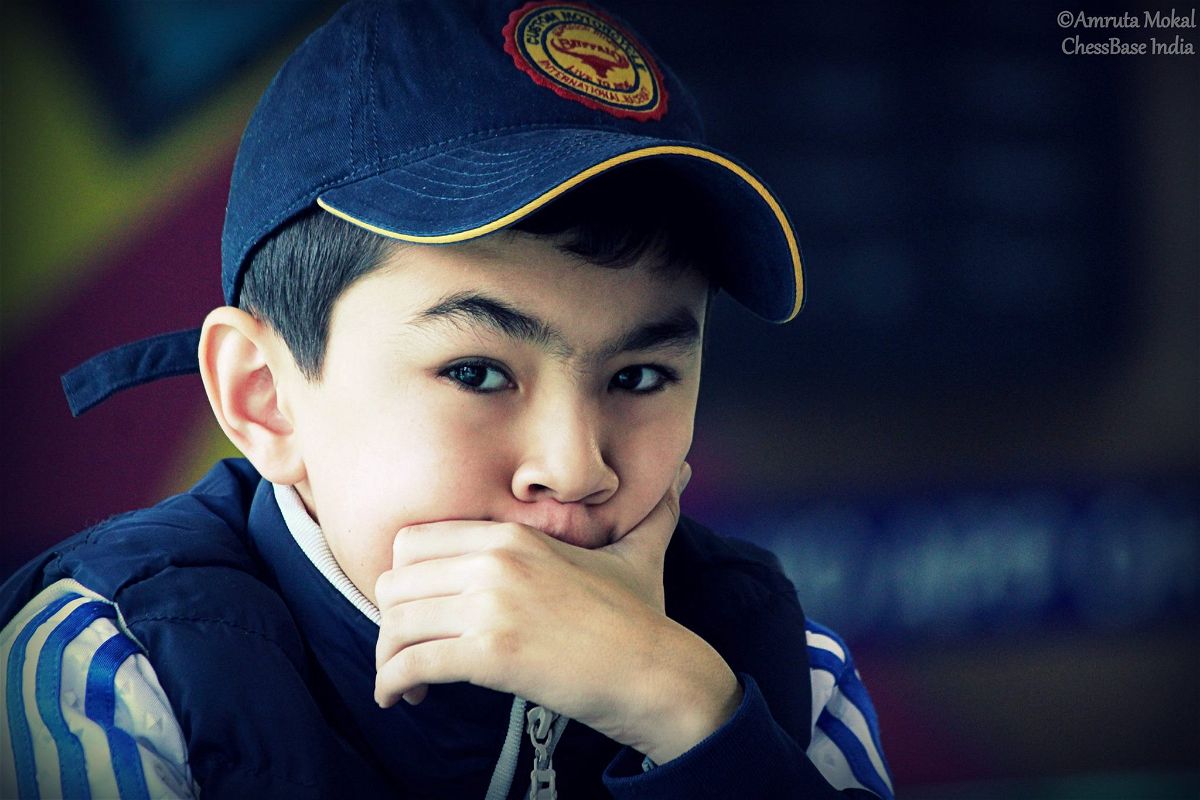
And at that time, Javokhir was also looking for new steps in his chess. Vladimir spoke with him and explained my system a little bit. He came to Munich, we had one day of training, and it was very interesting for him and for me also. And we started to train really, really a lot.
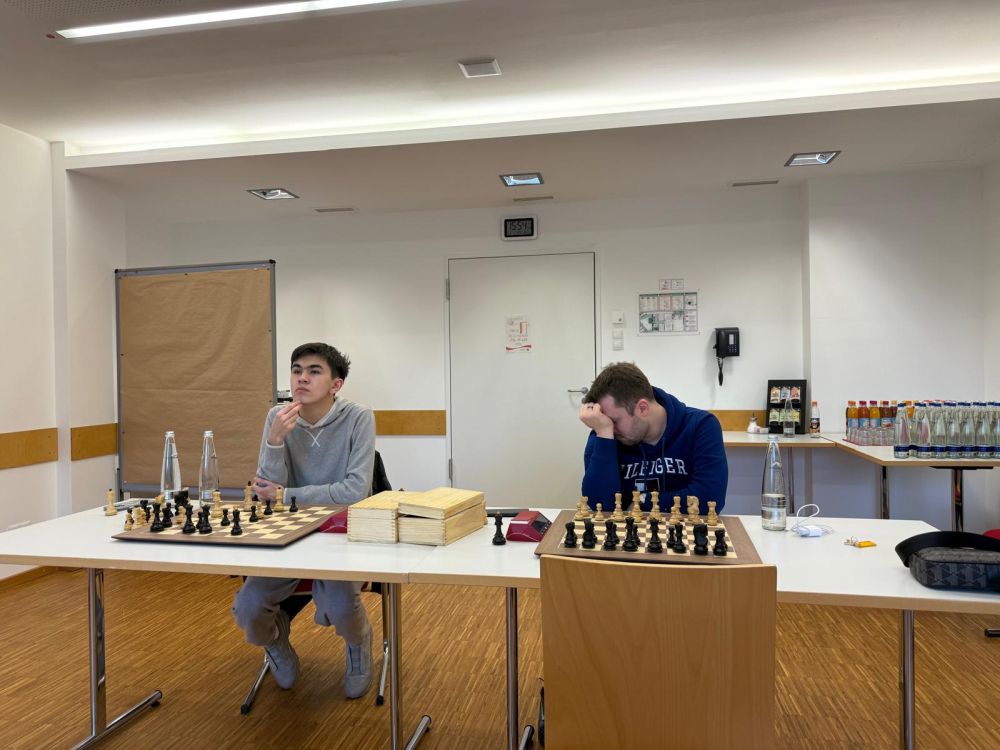
It was nine training camps, 10 to 14 days each, and I think around 140 or 160 days in total. Each day was intense - very intense - without computer, without engine, only on the board. Eight hours per day.
SS: Wow! When you say your system - what is it?
RV: Okay, I can explain it really well only in my upcoming book. I will try to explain shortly here. It is work on very important chess skills which super grandmasters need. I separate grandmaster skills into 17 parts. For every part, I have thousands of very special positions to train this skill. We train the skills with evaluation. My evaluation score is from C minus, the lowest, up to A plus. If I see that my student achieves A-plus in one skill, we go to training intensively in other skills. So, the evaluations are C-, C, C+, B-, B, B+, A-, A, A+.
SS: And Javokhir has not even reached A in most of the skills, yes?
RV: No, at this moment not even A-minus. He is at B right now. But he has the potential to go ahead in every skill.
SS: That means these puzzles are really tough.
RV: Yes, of course. And there are thousands, because he solves puzzles very quickly. I have about 40,000 puzzles which I created, but I need to create new puzzles every day.
SS: Do you hand-pick them or use AI?
RV: No, no, no. You have to know your student, his problems, and have an eye for puzzles that help this student and this problem. It cannot be done by AI.
SS: Let’s say in the game Matthias Bluebaum vs Javokhir Sindarov he made a suboptimal decision - will you create positions for that?
Matthias Bluebaum vs Javokhir Sindarov, Round 9

RV: Yes, of course. It is not so hard to explain. There are two moments. First is endurance. The stress and pressure was so high that his brain was tired. And a tired brain says, “Okay, make exchanges, go to a safe endgame, don’t calculate too much.”

If we train endurance, the brain becomes better in these situations and says, “Okay, you can double-check, you can think about other moves.” And he has the energy to do it. Currently Javokhir has enough energy but not for every move and for every game in a tough tournament.
SS: So endurance is one of the 17 skills?
RV: Yes, one very important skill.
SS: Your system is inspired by trainers like Platonov and Dorfman?
RV: Yes. Igor Platonov in this case. Dorfman inspired me to understand the mechanics of chess - static balance. It’s a great book, very important to understand chess. But his method is very hard to understand from the book. I worked with him and his students for 6 camps, so I understand it very well. It’s a whole theory of chess mechanics. It's not so easy to understand from the book.


SS: And that made you realize chess can be studied in this structured way?
RV: We now speak about Igor Platonov. He was a great mind and a very strong grandmaster and a beautiful trainer. He played six finals of Soviet championships. All of these finals are like Candidates here - very strong tournaments. He said to me, "Roman, if you have talent, if you are a good player, you have to work on your endurance and intensity of thinking on the board."

Platonov discussed his theory with GM Alexander Kotov. Kotov was a pioneer in the subject of calculation and candidate moves and taught how grandmasters think. He has a book also on this subject. Platonov improved Kotov's system and build his own. I learnt from Platonov and improved the system making it bigger because as a player one needs not just endurance, but also 16 other skills!

SS: You collect positions every day?
RV: Yes. I look at hundreds of games every day and know which position belongs to which skill. Strong grandmasters need thousands of positions. You cannot improve a skill with 50 or 100 positions- it’s like muscles. You cannot go to the gym for three months and say, “I have biceps for life.” It goes away when you don't train.
SS: The amount of effort that a player has to put is insane if they follow your method. How sustainable is this?
RV: If someone is not motivated, he will not be a great player. After two or three months of working in my system, you feel stronger and start to like the training. But the first two or three months are very tough.
SS: It's like going to the gym. After 2-3 months, you start to see the results.
RV: 100%. Also with jogging, for example. Yes, the first month is, "Oh, early morning I have to go jogging," but after two months, you want to do it. In fact you like doing it!
SS: What drives your motivation?
RV: It is born from love for chess and love for the profession of chess coaching. I love this profession, I love these ideas. And I want to be better every day - and to be better, you have to work.
SS: You were born and brought up in Lviv, but then moved to Germany, yes?
RV: Yes, at 21. Before that, I studied at the University of Sports, chess faculty in Lviv and then I went to Germany with my wife Nelly Vidonyak.

When I first reached Germany I didn’t speak German, so I worked simple jobs - McDonald’s, bus driver, and others. In the first two years I had about seven jobs. At the same time, I trained at clubs. My first student who became a GM was Leonid Kritz. Then more players came - Rainer Buhmann, Sebastian Bogner, Dennis Wagner. As a professional coach, I started working since 2011.
SS: Your parents were musicians, right? Did they in any way influence your decision of choosing chess as your career?

RV: Yes. They are musicians. My father said, “Three musicians in one family is pathology! Do something else.” So I chose chess. At the age of 16 I told my parents I will be a chess coach. My parents being artists, had no problems with my choice and this was important for me.

SS: Did you ever worry about not becoming a GM?
RV: No, I didn’t think about it. I had a very charismatic first trainer, Viktor Scherbakov. I trained with him for seven years, and I thought, "Man, I want to be a coach like him."
SS: When it comes to an IM being a top trainer, the thought definitely goes towards Mark Dvoretsky. He has written many books, trained players like Yusupov, Dreev, Dolmatov. Have you read his books?
RV: Yes, of course I have read his books and I think he did a great great job. But he lived in the times without engines and it was very hard to do more than what he did. You have to be a Super Grand Master to make exercises so precisely without an engine. Today we are in different times and engines have surely helped me a lot.
SS: One of the things that Magnus Carlsen has mentioned is that Classical chess is getting dull. Do you agree with it?
RV: Not at all. Maybe it is boring for Magnus because he has played so much and won so much. Also for his world championships he must have prepared a lot of openings, and it must have become hard and boring for him. Learning opening variations for hours each day is not the only way. We can do it differently. We also have Ferraris and other cars, but Usain Bolt is running 100 metres race and that is extremely exciting to watch. The same is for chess. After preparation, we still get long games with critical moments - attack, defense, endgames.
SS: You also work with neurologists and understand how the brain works, right?
RV: Of course - it is our instrument. I read and think a lot about it. I will write about it in my book - regarding mnemonics, memorizing - science is very developed in this case. Chess players don't use it but have to use it.

SS: Can you give example of how the brain works, but chess players are not aware of it and are not taking advantage of the same.
RV: I don't know how much to reveal, because we have a match with Gukesh. In my book, I will reveal a lot of things that will be useful for trainers and players, but not all the secrets. All that we need for the preparation of the match I will keep in silence, of course.
SS: Which game of Javokhir impressed you most in this Candidates tournament?
RV: Against Fabi in the second half. It was brilliant defense. After the game Iosif Dorfman called me and said, “Oh man! So strong! This draw is better than 10 wins!"

SS: It was an incredible defence. It's not the kind of positions that Javokhir excels in, right? He found so many good moves - Kg6, h5, Kh6 and so on.
RV: It was not his kind of position one year ago! But we have worked on almost 200 positions with defence and played several games out. It is one of the important skills in my system.
SS: His games against Pragg were also amazing!
RV: Yes, they were quite amazing! The first game is Tal like. While we prepared very well, I think our opponent's preparation was perhaps not as good as I expected. In preparation you also need to have luck. You prepare hundreds of positions and variations. What comes on the board is also a matter of luck.
SS: You also work with Bibisara Assaubayeva?
RV: Bibisara is the same part of my training as Javokhir. I believe she will be the strongest chess player in the world. She has to do a lot of training. We know elements on which we have to train, of course, and she needs time. But she is very young, very motivated and I am proud to train Bibisara.

SS: SS: What makes you feel about Javokhir that he will become the best in the world? I know it's your method and your system is there, but you did that with Anish Giri as well, you did that with Fedoseev as well. What about Javokhir makes you feel that?
RV: Anish Giri and Fedoseev are not as young as Javokhir; that's the first point, of course. And they perhaps don't have the time or energy or mentality now to train so hard. But I am sure if Anish trained nine camps per year with me, he could be 2,800. He is not an old player. He has the potential.
SS: Do you think that someone who works with you has to trust the process with which you are working? Because if they have doubts in their mind, it wouldn't work.
RV: For the first camp. After the first camp, every strong grandmaster understands what is this. But for the first training camp I am an unknown trainer and of course a grandmaster has to have trust in my system somehow.
SS: Clearly you are not unknown now. After this, I'm pretty sure that you would have so many people approaching you for working with you and so on.
RV: Thank you. But now I don't invite people to my camps; I have enough to do and we have our tasks now with Javokhir.
SS: And this is what surprises me - that until 2025 - I wrote this in my article - when I first saw you, I was like, "I haven't seen him or heard of him," and I'm in chess journalism for 10 years, which means that you have tried to remain away from the limelight.
RV: I'm sitting in my home. I love my home. I like my wife, my daughters, my cats. Yes. And I am working on chess and positions. I don't have social media, for example. And that's why, perhaps you never heard of me.
SS: No social media, you don't like it?
RV: I have no time for social media.
SS: What about your students? Because these youngsters who are there, they like social media. What's your take on that?
RV: Social media is not good for the brain, of course. But young people who train hard have to have some points to be free in their lives. And I'm not so strict to say "no social media." I think it's a choice that they have to make.
SS: So you basically say, "Eight hours are with me, after that what you do is yours."
RV: Of course. Please do some sports. Look at some cinema and build your mind but feel free.
SS: There would be certain things which are not so great for a sportsman, like having alcohol or something. Do you have certain rules?
RV: This is 100% - alcohol and tobacco are very bad for the brain. But professional young chess players understand that even without me having to tell them.
SS: You mentioned yesterday about the match with Gukesh, and this is going to be a very interesting match. As of now, many people say Javokhir is the favorite. But you mentioned about these two versions of Gukesh - the Gukesh who is not in form and monster Gukesh. Could you throw a bit of light?

RV: Yeah. Monster. I am afraid of "Monster" Gukesh. Of course, as I saw his games at the Olympiad and some tournaments before, I was afraid he had a trainer who was better than me.
SS: So you're talking about Gajewski?
RV: No, I don't know. Every good team in sports has a trainer like Pep Guardiola or Jurgen Klopp, for example. But every team has an athletic trainer who works 90% of the time on the athletic skills of football players and basketball players, and so I’m an athletic trainer. Gajewski is not an athletic trainer; he’s an opening trainer, I think. Yes. But I thought Gukesh has a very good athletic trainer.
SS: Athletic trainer basically is someone who makes you understand chess deeply? Is that correct?
RV: Yes! Take for example Ronaldo or Messi. He doesn't play with the trainer of the team all the time. He trains with an athletic trainer all the time, year for year, day for day, week for week to be able to show these skills which he has. And chess needs also this athletic trainer. Most of the super grandmasters have only a theory trainer, only an opening trainer. This is a mistake. I think.
SS: I'm pretty sure everyone had an athletic trainer at some point, and then the super grandmasters feel we've worked through this phase and now we have to focus on the openings more. Is that what happens to super GMs?
RV: I think we have had no athletic trainer in chess at all. For example, Dvoretsky - he was with one good grandmaster for one stage, with another good grandmaster for two stages. But athletic training is for every day, for every week between the tournaments. Intensity is very important.
SS: So coming to Gukesh's athletic trainer, you think he/she is very good?
RV: I don't know how Gukesh achieved it, but he played so. And then something happened. I think it was wrong goal-setting. I think in his mind was to be World Champion as the highest goal, but it’s not right for a super grandmaster to have the highest goal to achieve World Champion's title.
SS: What should the goal be?
RV: I spoke about our four steps, our four goals. We have done two steps: qualify for the Candidates and win the Candidates. The third step is to win the World Championship, but it’s not the last step. The most important step - really not only for newspapers - is to achieve being such a strong player to dominate the chess world like Karpov, Kasparov, and Carlsen did for many, many years. Win all the tournaments and to be the strongest chess player in the world is a very important goal, a very hard goal; it is a dream goal, of course, but it’s important to have this goal. And I think Gukesh arrived at his last step to be World Champion and looked, "What do I do now? I have to show for all the world that I am the best," but he was not the best! He has to understand he has to work for this for a long time and to achieve this in two, three, four years perhaps. This was a little bit of a secret, but I think I wish Gukesh also all the best.
SS: It can help him in his chess journey. But in general, when it comes to Javokhir and Gukesh, how close do you think the match will be?

RV: Against "Monster" Gukesh, I would give 53% for Javokhir, but it will be a very tough and open match. Two young boys play for the chess championship. It’s the first time in the chess world!
SS: You know Roman, when you come up with such a number like 53, it makes me think- how is it possible even to have this number? Like someone would say, "Okay, it's 50/50."
RV: It's only a feeling. It's really hard to explain, but I feel this - a little bit more chances for Javokhir for this match. Prime Javokhir and prime Gukesh.
SS: Would you say Javokhir is in his prime right now? I mean, of course he will work and he'll get better, but...
RV: Yes, of course. Last two weeks have been the highest level of Javokhir's life.
SS: You take certain decisions which are very interesting; like in Goa, you were supposed to come with Javokhir but you couldn't make it. And then you said, "Take someone with you," and Madaminov came.

RV: Yes, it was the first time that Madaminov supported Javokhir as a second, but I know that he is a good friend of Javokhir and for a long tournament like World Cup is so important to have a friend with you. And Madaminov is not only a good friend, he's a very good second, very strong chess player. He trained at my chess camps and he will be perhaps in the chess Olympiad team as well. I hope so. I wish him to be not only a very good second but also a very strong grandmaster.
SS: Have you worked also with Nodirbek Abdusattorov?
RV: For a couple of days. It was extremely interesting for me, of course. I think we will work in the future more. He is a machine - a machine of working, not of playing so much as of training. Such concentration, such motivation in training! It is number one of all my students which I have had until now. And on the board he has this killer instinct. It's very strong. I think if Nodirbek wants to play chess for a long time, he will dominate. It will be very difficult for Javokhir.

SS: When you look at Nodirbek and Javokhir, what are the similarities and differences that you see?
RV: I don't want to speak about that; it is very personal and I don’t speak a lot about my students because my students give me such information - this private information.
SS: What I saw about Javokhir is someone who flows. He's so relaxed, he's so happy, and on the board he has this intense focus. Suddenly in a press conference he's joking and laughing.
RV: I used to call him "Sunny Boy," but now I call him "TNT." Do you know this song from AC/DC? TNT.
SS: No!
RV: You have to hear it. It's 100% Javokhir. TNT. Yes. So, he basically can look like a very relaxed, chill guy, but on the board he's a killer.
SS: Brilliant. Roman, talking with you, I've gained so many insights into the world of chess and I really enjoyed it. I think as this is our first interview in person, it's a good time for us to stop because you have shared so much. But I would love to know more and maybe when the book comes out I would love to read it. I think that would be amazing.
RV: I hope. And I will try to learn English a little bit more to speak with you better.
SS: It's already very good.
RV: Thank you.

Important Links:
Roman's first article on ChessBase India
Related News

प्रज्ञानन्दा बने सेंट लुईस रैपिड एवं ब्लिट्ज के विजेता !

विश्व शतरंज चैंपियनशिप : गुकेश और सिंदारोव के बीच खिताबी मुकाबला 25 नवंबर से जिनेवा में

नॉर्वे शतरंज : गुकेश नें प्रज्ञानंदा को दी मात, जिनेर से जीती दिव्या

Gukesh beats Sindarov in their first clash after the FIDE Candidates 2026

Javokhir Sindarov on preparing to face D Gukesh for the World title

सिंदारोव बनें फ़ीडे विश्व कप 2025 विजेता 🏆

Meet Roman Vidonyak: The hidden coach behind top grandmasters

The young guns who ruled the Olympiad- Team Uzbekistan